Ceiling Leak Water Damage in King of Prussia, PA
The restoration team evaluates wet overhead materials before opening or drying them. Ceiling leak water damage in King of Prussia can involve an upstairs fixture, concealed supply or drain, with water appearing away from its starting point.
(888) 557-1733Assess the ceiling safely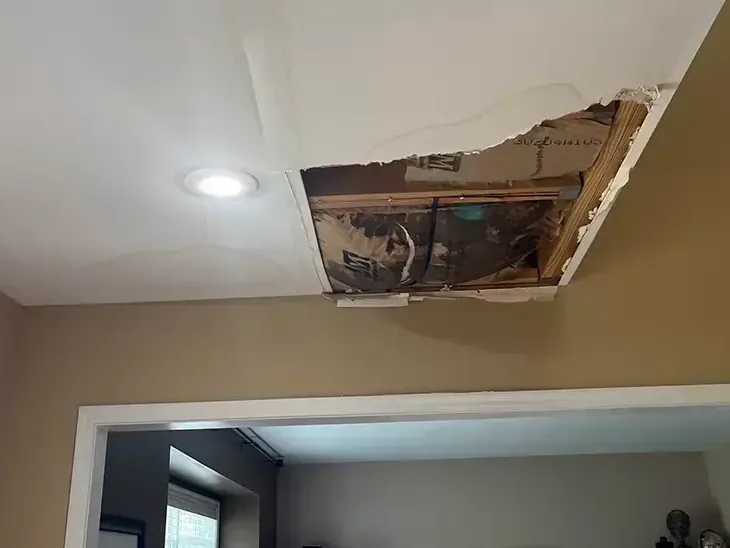
First steps for ceiling leak water damage
- 1
Clear the space below
People and possessions stay away from a sagging ceiling. The team assesses instability before working beneath wet drywall or a swollen seam.
- 2
Keep wet fixtures untouched
Occupants avoid light switches and fittings in the affected area. Electrical isolation requires a dry, safe approach and appropriate assistance when conditions are uncertain.
- 3
Identify activity upstairs
The owner notes whether the stain grows during bathing, laundry or continuous supply use. These observations support diagnosis without proving the exact source.
- 4
Preserve access to both rooms
The crew needs a route to the damaged ceiling and, when relevant, the room above. Shared-building access requires coordination before openings begin.
How the team approaches ceiling leak water damage
Assess the affected assembly
Ceiling restoration starts with stability and source information. The team checks saturated drywall, insulation and framing, then plans controlled access so a small visible stain does not conceal a larger wet cavity above the occupied room.
Wet ceiling materials can become unstable, especially around a bulge or fixture. The crew establishes a protected work area and checks safe access before anyone disturbs the damaged overhead assembly.
(888) 557-1733Review overhead accessWhat does ceiling leak water damage cost in King of Prussia, PA?
Ceiling leak mitigation often costs $800 to $2,200 for a limited patch, $2,200 to $5,000 for a wet cavity and $5,000 to $9,000 across multiple rooms. Insulation, finish layers, access and electrical precautions affect the scope; source repair and repainting are separate.
Compare the inputs in the water damage cost calculator.
The ceiling leak water damage process in King of Prussia
- 1
Trace the upper source
The technician compares the ceiling pattern with activity and source findings upstairs, checking the full cavity path before setting the removal boundary.
- 2
Open under control
The crew protects the room below and removes unstable or obstructive material, recording the original condition and controlling debris through a planned access route.
- 3
Expose wet framing
Accessible joists and adjoining surfaces receive targeted drying, with humidity control and measurements used to identify pockets hidden beyond the first opening.
- 4
Verify the overhead assembly
Final checks address remaining framing and adjoining finishes, then the team records the drying condition for ceiling replacement and any separate electrical work.
A ceiling stain marks the point where moisture becomes visible. Water can run along a joist, pipe or seam before reaching that point. An accurate inspection therefore considers the upper room and the cavity between floors, rather than focusing only on repainting the stain.
Inspect both sides of the ceiling
Mid-century split levels in Upper Merion Township can place living rooms beside or below bathrooms and utility spaces. The technician checks the actual layout and identifies wet framing beyond the damaged finish. Source information from the upstairs room helps distinguish a supply release from a drain problem that appears only during use.
In shared residences at King of Prussia Town Center, building management may need to arrange access above the affected unit. Properties along DeKalb Pike also vary in occupancy and room arrangement. The crew documents the observed wet path, checks accessible cavities and coordinates source inspection with the appropriate repair trade.
Signs that change the overhead work plan
- A sagging or bulging section requires occupants to stay clear while the team assesses controlled removal.
- Water around a light fitting changes electrical access requirements before any equipment starts below the ceiling.
- Wet insulation may prevent the cavity from drying even after the surface stain stops growing.
- Multiple finish layers can hide retained moisture and make a surface reading insufficient.
- A repeated stain after fixture use warrants source diagnosis before the ceiling closes again.
Dry the cavity before finishing work
The mitigation team records which materials came out, the condition of remaining framing and the daily drying trend. A new coat of paint does not verify moisture removal. The EPA indoor-air information explains why indoor moisture control matters, while Ready.gov emergency preparation supports safe planning around damaged rooms. The scope for replacing finishes follows the condition left after drying, with any required construction review handled separately.
Ceiling leak water damage in King of Prussia
The restoration team covers ZIP 19406 in Upper Merion Township, including homes around DeKalb Pike and the mixed residential and commercial buildings at King of Prussia Town Center. Service also extends to King Manor, Gulph Mills and the nearby boroughs listed in the service area.
Ceiling Leak Water Damage questions
Wet ceiling materials can become unstable, especially around a bulge or fixture. The crew establishes a protected work area and checks safe access before anyone disturbs the damaged overhead assembly.
(888) 557-1733Should a homeowner puncture a ceiling bulge?
A bulge can conceal water, unstable drywall and electrical hazards. Occupants should keep the area clear rather than puncturing it from below. The restoration team evaluates controlled access after source and electrical concerns have been addressed.
Does the stain identify the leak location?
Only approximately. Water can follow framing or pipe routes and emerge at a joint away from the failure. The inspection connects observations above and below the ceiling, using source diagnosis and moisture measurements to narrow the affected assembly.
Can a ceiling dry without an opening?
Some limited clean-water exposure may dry with suitable access and conditions. Wet insulation, layered finishes or instability can make opening necessary. The team bases that choice on measurements and material condition, not on the stain size alone.
Who coordinates access in a shared building?
The owner or occupant contacts building management for access to relevant units and common spaces. The restoration team explains which areas need inspection. Entry arrangements and responsibility for source repairs remain separate from the evidence of where water travelled.
Why is the ceiling still damp after the leak stops?
Insulation and framing can retain moisture after active dripping ends. The cavity may have little air movement, particularly behind intact finishes. Drying equipment and selective access address that retained load, while daily readings show whether additional exposure is required.
Can repainting start immediately after extraction?
Finish work needs an adequately dry and sound substrate. A surface that feels dry may conceal wet backing or framing. The team records the final moisture condition before repairs close the cavity, and a separate repair scope addresses damaged finishes.
Check above the stain before closing it
The drying team follows overhead moisture into the cavity and documents what remains before the ceiling receives replacement finishes.