Structural Drying in King of Prussia, PA
The drying team measures moisture inside affected construction and sets equipment for the remaining load. Structural drying in King of Prussia follows extraction and necessary cleaning, with daily readings guiding changes until the material goal is met.
(888) 557-1733Check what remains wet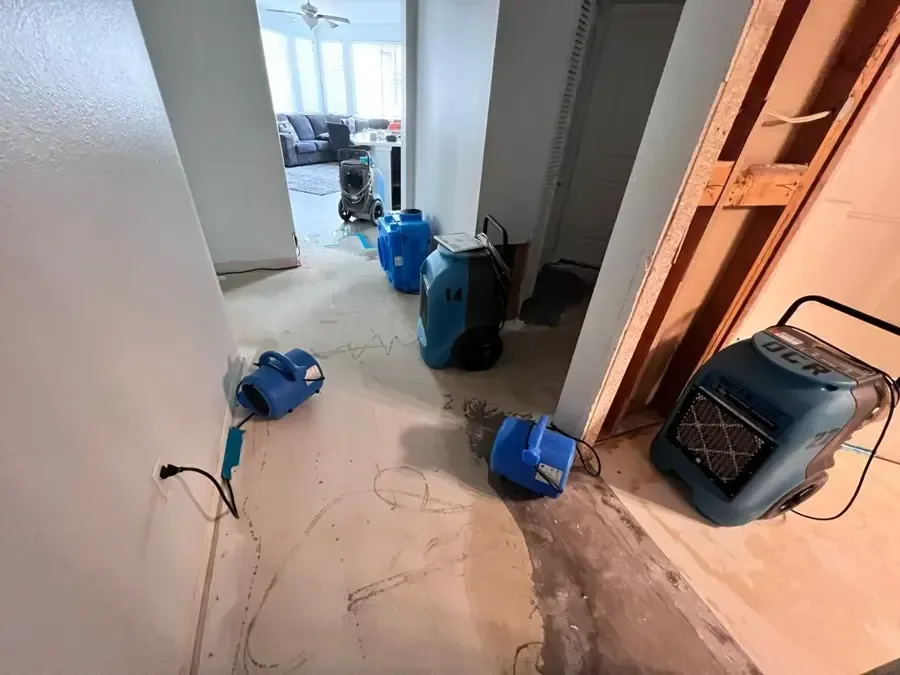
First steps for structural drying
- 1
Confirm the source has stopped
Drying cannot overcome a continuing release indefinitely. The team verifies source-control information and checks whether new water still enters the affected construction.
- 2
Expose the remaining load
The crew evaluates coverings and concealed spaces that restrict evaporation, removing unsuitable material when necessary before relying on additional equipment alone.
- 3
Keep the drying zone stable
Occupants follow the agreed equipment and access plan. Unplanned shutdowns or open exterior doors can change humidity and interrupt measured progress.
- 4
Preserve monitoring access
The technician needs repeat access to reference points and wet materials. Contents and repairs stay clear of locations required for daily verification.
How the team approaches structural drying
Assess the affected assembly
The technician identifies wet materials, establishes suitable dry references and evaluates access to concealed surfaces. Air movers support evaporation, while LGR dehumidifiers remove moisture from the air; dense or difficult assemblies may require a different drying approach.
Materials can remain wet after puddles disappear. The drying technician checks concealed margins and suitable reference points before declaring completion, especially when a finish would hide the assembly again.
(888) 557-1733Review the drying readingsWhat does structural drying cost in King of Prussia, PA?
Structural drying commonly ranges from $1,000 to $2,500 for a small accessible zone, $2,500 to $5,500 for several assemblies and $5,500 to $10,000 for dense or concealed materials. Equipment load, access, material class and monitoring duration determine cost after extraction and cleaning.
Compare the inputs in the water damage cost calculator.
The structural drying process in King of Prussia
- 1
Set the material goal
The technician identifies wet construction and appropriate dry references, recording initial readings and any flooring or finish requirements that affect the completion threshold.
- 2
Build the drying environment
Equipment placement balances evaporation with moisture removal, and the team establishes practical access and operating conditions for the affected room or assembly.
- 3
Interpret the daily trend
Repeat measurements show which materials improve and which stall, prompting equipment changes or further investigation instead of an automatic extension without explanation.
- 4
Verify and document completion
The team records final readings, compares them with the established goal and identifies any remaining repair work before removing the drying setup.
Drying a room and drying its structure are related but different tasks. Comfortable air can surround damp framing, concrete or subfloor layers. The work plan therefore tracks both the room conditions and the materials that absorbed water, using consistent measurement locations to show meaningful progress.
Match equipment to the construction
Upper Merion Township's capes, colonials and split levels include varied room arrangements and building eras. The inspection identifies the actual material layers instead of assigning one standard drying duration to every house. A dense concrete surface and a thin finish may respond differently to the same room conditions.
At King of Prussia Town Center, shared building spaces can require separate equipment zones and access schedules. A home along DeKalb Pike may need a different arrangement to reach corners behind cabinetry or an adjoining lower room. The team measures those constraints rather than assuming that more fans always improve the result.
What the daily drying record contains
- Initial and repeat readings at consistent locations show whether the wet boundary is shrinking or merely changing shape.
- Temperature and humidity readings help explain how much moisture the air can carry away from exposed surfaces.
- Equipment type, placement and operating changes connect the drying setup to the observed material response.
- A suitable dry reference gives context for the project goal rather than treating every meter number as universal.
- Slow areas receive additional investigation for hidden layers, restricted evaporation or continuing water entry.
Do not close an assembly on appearance alone
The final record documents the measured condition before equipment removal and finish replacement. A practical target may compare wet materials within 2 to 4 points of a suitable dry reference, but meter type, material and replacement requirements still matter. EPA indoor-air information explains moisture control, and Penn State Extension provides building and household educational material. Neither substitutes for the readings and assembly-specific decisions at the loss.
Structural drying in King of Prussia
The restoration team covers ZIP 19406 in Upper Merion Township, including homes around DeKalb Pike and the mixed residential and commercial buildings at King of Prussia Town Center. Service also extends to King Manor, Gulph Mills and the nearby boroughs listed in the service area.
Structural Drying questions
Materials can remain wet after puddles disappear. The drying technician checks concealed margins and suitable reference points before declaring completion, especially when a finish would hide the assembly again.
(888) 557-1733What does IICRC S500 mean for drying?
IICRC S500 is the industry standard used to organize professional water damage restoration. It addresses assessment, water category, drying decisions and documentation. Referring to the standard describes a method of work and does not create a credential claim about an individual.
Can a dry touch replace a moisture reading?
No. A surface can feel dry while deeper material remains wet. The technician checks suitable locations and compares results with a reference or project requirement. Repeated readings show how the material responds to drying and identify any deeper or enclosed area that needs further access.
Why are dehumidifiers needed with air movers?
Air movement helps moisture leave exposed surfaces, while dehumidification removes that moisture from the room air. Without adequate humidity control, evaporation can slow. The team matches both parts of the setup to the remaining wet load and observed conditions.
Does every material need the same number of days?
No. Thickness, density, coverings and access affect moisture release. A contained loss may dry in several days, while dense wood or concrete can need longer. The schedule remains provisional until readings show how the particular assembly responds.
What causes drying to stall?
Restricted access, hidden wet layers, continuing leakage or unsuitable room conditions can limit progress. The technician reviews the trend and investigates the cause. Adding equipment without examining the assembly may fail to address the reason that one area remains wet.
Can equipment stop at night?
The operating plan normally relies on consistent conditions, but the technician should address noise, safety and occupancy constraints when designing it. Unplanned shutdowns can interrupt progress. The owner should discuss concerns before changing equipment settings or removing a unit.
Finish with evidence of dry materials
The drying team follows daily measurements, investigates stalled areas and records the condition that supports equipment removal.