Sewage Backup Cleanup in King of Prussia, PA
Sewage backup cleanup in King of Prussia begins with isolation and contamination control. The mitigation crew removes affected porous materials, cleans salvageable hard surfaces and verifies drying after the drain problem receives appropriate plumbing attention.
(888) 557-1733Isolate the sewage damage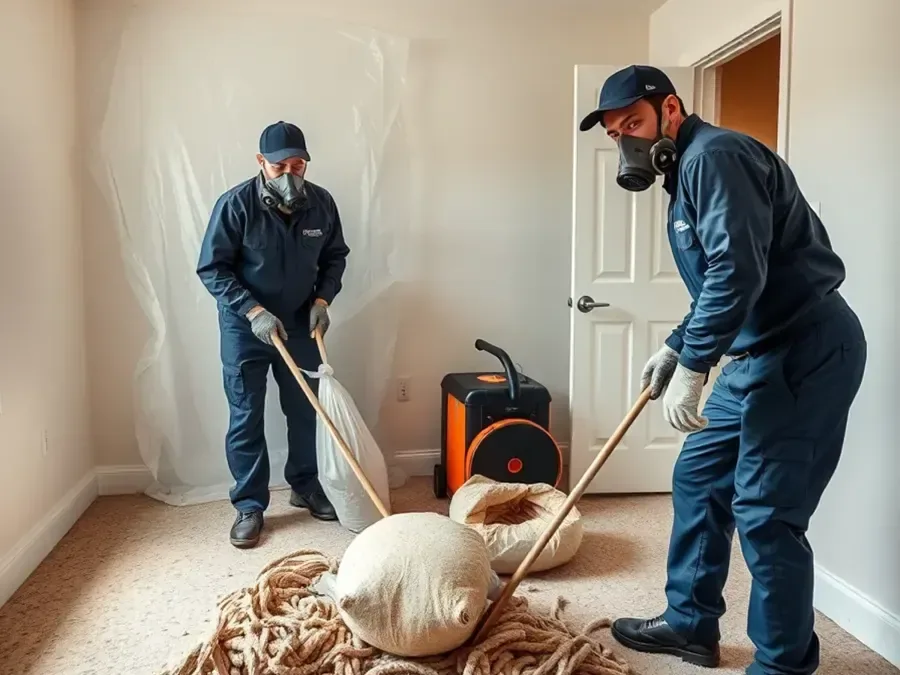
First steps for sewage backup cleanup
- 1
Restrict the room
Occupants keep people and pets outside the affected area. The crew establishes a boundary before walking, moving contents or placing equipment in sewage water.
- 2
Stop adding wastewater
Affected fixtures remain unused while the source receives investigation. Repeated flushing or appliance discharge can increase the backup and enlarge the contaminated footprint.
- 3
Avoid unprotected handling
The household does not sort contaminated porous belongings without a handling plan. The team separates waste routes from clean rooms and possessions.
- 4
Record only safe observations
Photographs from outside the wet boundary can show the affected rooms. Nobody needs to enter sewage or approach wet electrical equipment to collect evidence.
How the team approaches sewage backup cleanup
Assess the affected assembly
The crew treats sewage as Category 3 immediately. Protective gloves, suitable boots, eye protection and appropriate respiratory protection support the work plan, while containment and controlled debris routes keep contaminated material away from occupied clean areas.
Sewage exposure requires a separated work area and suitable protective equipment. The team controls access before extraction, keeps porous waste contained and cleans remaining surfaces before accelerating evaporation.
(888) 557-1733Arrange Category 3 assessmentWhat does sewage backup cleanup cost in King of Prussia, PA?
Sewage backup mitigation commonly costs $2,000 to $4,500 for a confined area, $4,500 to $9,000 across several rooms and $9,000 to $18,000 for extensive contaminated assemblies. Porous-material disposal, access, cleaning and drying drive the range; drain repair and reconstruction are separate.
Compare the inputs in the water damage cost calculator.
The sewage backup cleanup process in King of Prussia
- 1
Define the dirty boundary
The technician records affected rooms and materials, then establishes protection and access controls that separate contamination from the unaffected portions of the property.
- 2
Remove water and porous waste
Extraction and controlled disposal expose remaining surfaces, with removal extending beyond the visible water mark wherever porous material has absorbed contaminated water.
- 3
Clean with proper contact time
The crew physically cleans salvageable surfaces and applies an appropriate EPA-registered antimicrobial according to its label, including the specified dwell time before drying continues.
- 4
Verify moisture after cleaning
The drying team measures exposed assemblies and adjusts equipment until the project goal is met, preserving cleaning and moisture records for the owner.
Black-water cleanup requires more than removing visible solids or masking odour. Waste can remain in seams, porous layers and concealed wall margins. The team establishes the contamination boundary before extraction and evaluates every affected material for safe removal or cleaning.
Drain responsibility and interior cleanup are separate
Upper Merion Township Public Works provides wastewater service in the main community. That fact does not identify whether a particular backup began in private plumbing or a public main. The owner reports the symptoms and arranges appropriate source investigation while the mitigation crew documents indoor damage.
Shared premises at King of Prussia Town Center may need building management to coordinate access and fixture restrictions. At a property near DeKalb Pike, the crew also plans a route that avoids carrying contaminated debris through unaffected rooms. Neither the building address nor the number of backed-up fixtures alone proves the source.
Removal extends above the visible wet edge
- Contaminated carpet, padding, insulation and other porous materials require removal instead of drying in place.
- Wall removal extends above the waterline as needed to reach affected porous material and expose cleanable surfaces.
- Workers use suitable protective equipment and keep waste handling separated from clean equipment and belongings.
- Physical cleaning removes soil before an EPA-registered antimicrobial receives its required labeled dwell time.
- HEPA filtration and containment support the work plan where disturbance could spread contaminated particles.
Document the cleaned and dried assembly
The loss record includes source observations, disposal photographs, cleaning notes and final moisture measurements. Product application does not substitute for removing unsuitable material or physically cleaning hard surfaces. EPA wastewater information provides sanitation context, and OSHA provides workplace safety information. The crew applies the actual job assessment and product instructions rather than promising that fragrance, clear water or a dry surface proves an acceptable result.
Sewage backup cleanup in King of Prussia
The restoration team covers ZIP 19406 in Upper Merion Township, including homes around DeKalb Pike and the mixed residential and commercial buildings at King of Prussia Town Center. Service also extends to King Manor, Gulph Mills and the nearby boroughs listed in the service area.
Sewage Backup Cleanup questions
Sewage exposure requires a separated work area and suitable protective equipment. The team controls access before extraction, keeps porous waste contained and cleans remaining surfaces before accelerating evaporation.
(888) 557-1733Is sewage Category 3 immediately?
Yes. Sewage starts as grossly contaminated water, so the crew establishes protective controls from the outset. The plan does not wait for odour, discoloration or elapsed time before treating affected materials and work routes as contaminated.
Can contaminated carpet be disinfected and kept?
Sewage-exposed carpet and padding are porous materials that require removal. Surface treatment cannot reliably address contamination throughout those layers. The team removes them through a controlled route and cleans the remaining accessible assembly before drying begins.
Why remove drywall above the water mark?
Porous material can wick contaminated water beyond the visible level. The removal boundary follows the affected material rather than the stain alone. Opening the wall also exposes surfaces that need cleaning and moisture checks before the cavity closes again.
Does antimicrobial application finish the job?
No. Physical cleaning and removal of unsuitable materials come first. An appropriate product then needs its labeled application method and dwell time. The remaining assembly still requires drying and verification; spraying a surface does not replace those steps.
Can a homeowner determine whether the public sewer caused it?
The homeowner can report which drains backed up and when the water first appeared. A plumber or relevant wastewater agency investigates the source. The restoration team photographs the indoor contamination, records the affected rooms and documents the material removal and cleaning work.
When can normal room use resume?
That depends on completion of source control, contaminated-material removal, cleaning, drying and any required repair. The team records the condition left after mitigation and identifies unfinished work. The final walkthrough checks retained assemblies and reviews any repairs still needed before the room returns to normal use.
Contain the backup and clean its full path
The sewage crew removes unsuitable material, observes product dwell times and verifies the remaining assembly before repairs conceal it.