Ceiling Leak Water Damage in Norristown
A ceiling stain marks where water became visible, not necessarily where it entered. Norristown ceiling cleanup begins with the space above the stain, the stability of the finish and any adjoining rooms reached by moisture.
(888) 557-1733Discuss overhead water damage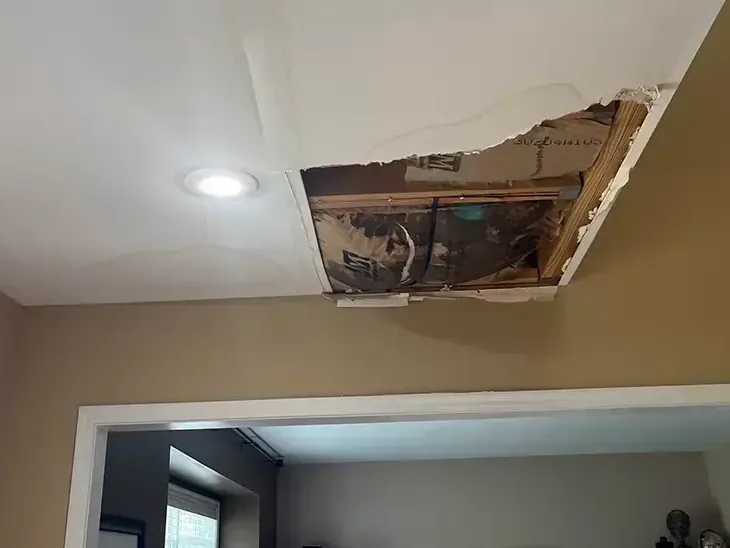
First steps for ceiling leak water damage
- 1
Clear the area underneath
Keep people and movable belongings away from bulging or sagging ceiling material. Avoid pressing, puncturing or attempting to drain the overhead surface personally.
- 2
Notify the upper occupant
In a shared building, contact management about the room above the stain. Access there may be necessary to identify and stop the source.
- 3
Keep wet fixtures untouched
Do not operate lights or equipment where water has reached electrical components. Report the affected fixture location during the initial assessment discussion.
- 4
Record how dripping changes
Note whether leakage is continuous or appears during fixture use or rain. Observations from a safe location can help the appropriate trade investigate the source.
How the team approaches ceiling leak water damage
Assess the affected assembly
Ceiling leak cleanup connects source tracing with safe access to wet overhead materials. The scope considers insulation, framing and the room below so a repaired surface does not conceal moisture left behind after the leak stops.
A sagging ceiling can shed wet material without warning. Keep occupants outside the area beneath it and leave affected lights untouched while the source and overhead condition are assessed.
(888) 557-1733Report a sagging wet ceilingWhat does ceiling leak water damage cost in Norristown, PA?
Ceiling cleanup in Norristown is shaped by the cavity condition, safe access and the rooms affected below it. Wet insulation or repeated staining can expand the assessment. A written scope should separate controlled removal and drying from the source repair, ceiling replacement and painting.
Compare the inputs in the water damage cost calculator.
The ceiling leak water damage process in Norristown
- 1
Evaluate overhead stability
The initial assessment considers sagging finishes, fixture involvement and the source location before access is planned beneath or within the affected ceiling assembly.
- 2
Coordinate source room access
Inspection connects the visible stain with the space above it, arranging management or trade involvement where the source cannot be reached from the damaged room.
- 3
Address wet cavity materials
Damaged finishes and saturated contents of the cavity are evaluated for removal, while retained framing receives an appropriate drying arrangement after the leak is controlled.
- 4
Document the repair boundary
Final notes identify the opened areas, retained materials and moisture results so replacement ceiling work can proceed with a clear understanding of the completed cleanup.
A drip appearing through ceiling paint can be the end of a longer route through framing. Moving a bucket beneath it protects only a small part of the room. The assessment must establish the source and whether the overhead material can remain safely in place.
Coordinate inspection on both sides of the ceiling
The East End has added apartments, condominiums and townhouses. In those shared settings, the room showing damage may belong to a different occupant from the source room. Management can arrange access above the stain and help communicate which areas should remain out of use during inspection.
The Luxor and Regatta Apartments are named residential developments in the East End. For a leak in any building, the useful details include the affected level, nearby plumbing and whether water appears when an upstairs fixture runs. Those observations help organize source diagnosis and the cleanup assessment.
Look beyond the painted surface
- Sagging or softened ceiling material requires a safety decision before anyone works or stores belongings beneath it.
- Insulation inside the cavity can hold water against framing even after the visible dripping has ended.
- Light fixtures and other electrical components need appropriate assessment when water has reached their location.
- Wall edges and the floor below need inspection when overhead water has spread beyond the original stain.
Close the cavity after its condition is understood
A supply pipe release needs source control before ceiling recovery can progress. Once damaged materials are addressed, drying the exposed assembly provides the measurements needed for repair planning. Replacement drywall and paint belong after the wet framing and any retained layers have been evaluated. The homeowner should receive a record connecting the ceiling opening, material decisions and final moisture condition.
Ceiling leak water damage in Norristown
Ceiling assessments in East End, North End and Downtown should identify the room above the damage and any access restrictions. In multiunit properties, a management contact can help coordinate inspection where the source and visible stain occupy separate spaces.
The same service nearby: ceiling leak water damage in King of Prussia, Conshohocken, Ambler.
Ceiling Leak Water Damage questions
A sagging ceiling can shed wet material without warning. Keep occupants outside the area beneath it and leave affected lights untouched while the source and overhead condition are assessed.
(888) 557-1733Is a small ceiling stain safe to ignore?
The stain's size does not reveal the condition of the cavity above it. A small mark can accompany wet insulation or an intermittent leak. Arrange source investigation and avoid the area if the surface is swelling, softening or beginning to sag.
Should a homeowner puncture a ceiling bubble?
Bulging material can release water and weakened debris unexpectedly. Keep the area clear and let qualified personnel assess controlled access. Electrical components and the weight of retained water complicate the situation, so a bucket alone does not make the overhead area safe.
Can cleanup begin without access to the upper unit?
Some immediate protection may be possible, but source tracing and a complete assessment often require access above the stain. Management coordination helps arrange that entry. Without controlling the source, newly dried or repaired ceiling materials can be exposed to another release.
Will painting cover the damage once dripping stops?
Paint can conceal discoloration while leaving wet material behind it. The ceiling assembly needs assessment for moisture and physical damage first. Source repair, appropriate drying and replacement of unsalvageable material should precede the cosmetic work on the visible surface.
Why does the adjoining wall need inspection?
Water can travel along framing and reach the ceiling perimeter before running into a wall cavity. The visible drip may therefore represent only part of the affected area. Inspection around the stain helps establish whether the wall and floor below need additional attention.
What determines how much ceiling material is removed?
Stability, contamination, saturation and access needs shape the removal area. The work should expose affected materials sufficiently for assessment and drying while documenting why each section is opened. A clear repair boundary helps the next contractor understand the completed cleanup scope.
Resolve moisture above the visible stain
Discuss an inspection that connects the upper room, concealed materials and safe repair access before the ceiling is closed and refinished.