Structural Drying in Lansdale
A room can look ready for repairs while its floor layers and framing still hold water. Structural drying follows those materials through repeated measurements, adjusting access and equipment until the remaining moisture work has a documented endpoint.
(888) 557-1733Discuss retained building moisture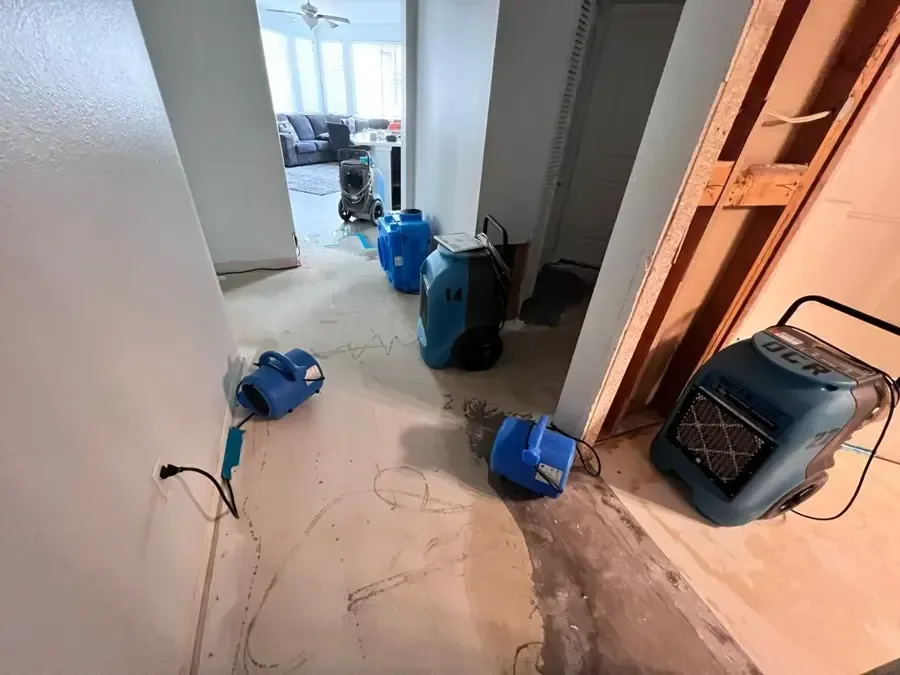
First steps for structural drying
- 1
Confirm the source status
Describe completed source repairs and new wet areas. Continuing leakage interrupts progress, so report moisture changes while the drying project continues.
- 2
Identify retained wet materials
Describe the affected flooring, wall layers and overhead surfaces. Include areas opened during prior cleanup so the assessment can account for both exposed and still concealed assemblies.
- 3
Preserve equipment conditions
Once a drying setup is arranged, changes to equipment position or room use should be coordinated. Moving a fan or closing access can alter which surfaces receive treatment.
- 4
Keep the repair schedule flexible
Finish replacement should follow the material assessment rather than a preset decoration date. Share planned contractor visits so remaining moisture checks and repair access can be coordinated.
How the team approaches structural drying
Assess the affected assembly
Structural drying removes moisture held within suitable retained building materials after liquid and contamination have been addressed. The process combines access, air movement and humidity control with repeated measurements of the assemblies that were actually affected by the release.
Drying equipment should operate within an assessed work area with safe electrical access. Keep settings and placement coordinated with the project plan, and report new leakage or changing wet areas while treatment continues.
(888) 557-1733Discuss the moisture readingsWhat does structural drying cost in Lansdale, PA?
Structural drying costs in Lansdale reflect the materials, access and equipment needed to remove retained moisture. Dense or concealed assemblies can require more monitoring and adjustment than an open localized area. The estimate should explain the drying zone, equipment scope and evaluation process separately from material replacement or source repairs.
Compare the inputs in the water damage cost calculator.
The structural drying process in Lansdale
- 1
Establish material readings
Assessment records affected locations and suitable comparison conditions, mapping retained moisture before the project equipment arrangement and monitoring approach are selected for those assemblies.
- 2
Create drying conditions
Air movement and dehumidification suit the exposed materials. Addressing restricted access and room conditions allows evaporation to continue from layers retaining the remaining moisture.
- 3
Measure and adjust
Repeated checks track material response, prompting placement changes, improved access or source investigation when a section dries slowly or readings stop improving during treatment.
- 4
Document final condition
Completion records connect treated locations and material results with outstanding repairs, giving the homeowner and contractor a clear basis for replacing finishes afterward.
Lansdale Borough lists interior structural damage work among projects requiring a permit. Drying an affected assembly and repairing a damaged structural component are different tasks within recovery. A clear scope should explain which materials can remain for moisture treatment and which need a separate repair evaluation before the building is closed up.
Choose comparison points before judging progress
A useful drying record follows identified locations rather than collecting unrelated readings each visit. Moisture in an affected wall base can be compared over time and interpreted alongside an appropriate unaffected area. That approach helps show whether equipment is reaching the material, whether access remains restricted or whether more water is entering the assembly.
Match treatment to the layer holding water
A project near Broad Street, Valley Forge Road or Pennbrook station should be described by its own floor, wall and ceiling construction. Dense floor layers and open wall framing release moisture differently. Equipment placed in the middle of the room may need repositioning when the slower material is concealed at an edge or behind an attached finish.
- Identify the specific surfaces and layers included in the monitored drying area.
- Record readings consistently so material progress can be followed across the equipment period.
- Reassess access when the surrounding air improves but a concealed assembly remains wet.
- Investigate a continuing source when moisture returns or moves into previously unaffected materials.
Make closure a documented decision
When standing liquid remains, water extraction comes before the final drying assessment. A wet lower level may also require basement removal work. At completion, the record should identify the treated assemblies and any conditions affecting repair. Replacement finishes can then be scheduled around the material results and the separate construction scope rather than the date equipment was first installed.
Structural drying in Lansdale
Drying requests near Main Street can identify the assemblies that remain wet after initial cleanup. Describe any existing equipment and the areas already opened. The assessment can then focus on retained materials, restricted access and the records needed to support a clear handoff for repairs.
The same service nearby: structural drying in King of Prussia, Ambler, Norristown.
Structural Drying questions
Drying equipment should operate within an assessed work area with safe electrical access. Keep settings and placement coordinated with the project plan, and report new leakage or changing wet areas while treatment continues.
(888) 557-1733Why can a dry feeling room still need treatment?
Room air and building materials do not necessarily recover at the same pace. A floor layer or wall cavity can retain moisture after surfaces feel comfortable. Material readings help identify that difference and show whether the setup is addressing the assembly that still needs treatment.
What does a comparison reading contribute?
An appropriate unaffected material provides context for interpreting readings in the damaged area. Repeated measurements at identified locations then show change during treatment. The comparison should fit the assembly being assessed rather than using an unrelated surface as the basis for every completion decision.
Can equipment placement change during the project?
Yes. Adjustments may be needed when readings show a slower section or newly accessible layer. The reason should connect to the moisture map and material response. Equipment is useful when it reaches the wet assembly, so a fixed arrangement is not automatically the best one.
Why might a finish need opening during drying?
An attached surface can block access to a wet layer and restrict evaporation. If the assembly cannot dry effectively as configured, selective opening may be considered. The scope should explain the material problem and the access benefit before removal proceeds in that area.
Does drying repair weakened building components?
Drying addresses moisture in suitable retained materials. A component damaged beyond retention needs separate repair evaluation and construction work. The closing record should distinguish those conditions so removal of equipment is not mistaken for completion of every structural or finish repair in the property.
What should remain after equipment is removed?
The homeowner should have a clear account of the affected assemblies, final condition and repairs still required. That record helps coordinate reconstruction and explains the drying endpoint. It should connect completion to inspected materials rather than simply listing how long equipment occupied the room.
Set a measured endpoint before rebuilding
Describe the wet assemblies and planned repairs so the assessment can connect equipment choices, monitoring and the condition needed before those materials are covered.