Structural Drying in Collegeville
A floor can feel dry while the assembly beneath it still holds moisture. Collegeville structural drying uses material assessment and recorded progress to direct equipment, evaluate concealed layers and support an informed decision about when repair can proceed.
(888) 557-1733Discuss the materials still wet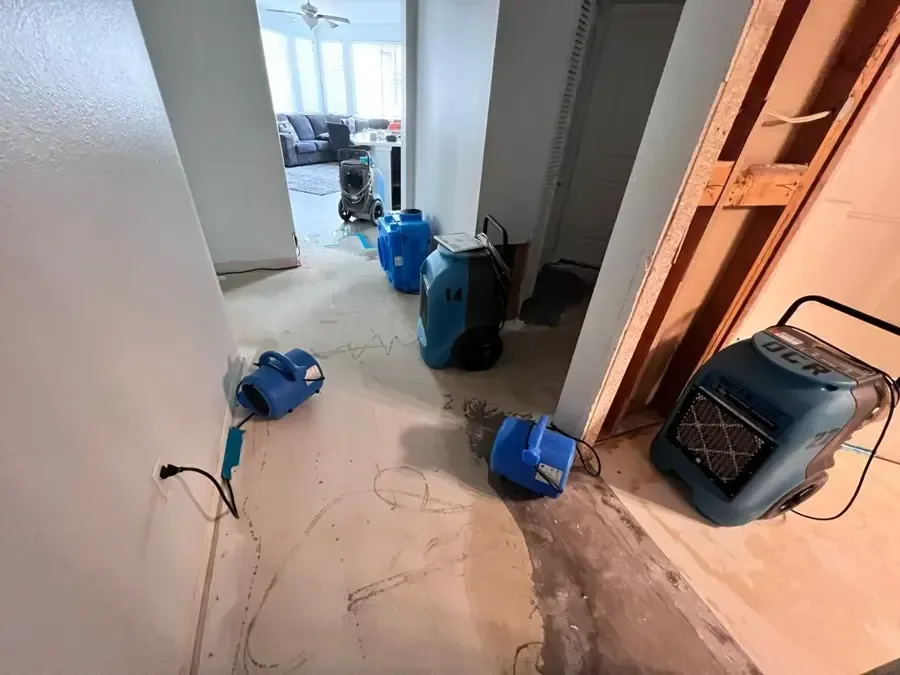
First steps for structural drying
- 1
Describe completed source work
Provide details of the leak repair, extraction and any cleaning already performed. The drying assessment needs to know whether fresh water can still enter the assembly.
- 2
Keep access points available
Avoid patching openings or replacing trim before retained materials have been evaluated. Existing access may be needed to reach moisture or obtain useful readings.
- 3
Discuss occupied room needs
Explain which rooms must remain accessible and where equipment would obstruct movement. The plan can then address workable routes around the affected assembly.
- 4
Ask for material based progress
Request an explanation of what is being measured and how results affect the next step, especially before a concealed surface is approved for repair.
How the team approaches structural drying
Assess the affected assembly
Structural drying addresses moisture retained after water removal and necessary cleaning. Equipment and access decisions follow the affected materials, with progress checks that explain whether framing, subfloors or wall layers need further treatment before being covered again.
Leave wet assemblies accessible until their condition has been evaluated. Patching an opening or replacing flooring too soon can conceal material that still needs treatment and make further inspection harder.
(888) 557-1733Examine the remaining moistureWhat does structural drying cost in Collegeville, PA?
Structural drying allowances in Collegeville depend on material density, concealed moisture and the access required to treat it. Equipment needs can change as readings develop. An estimate should identify the drying area, monitoring work and any selective removal separately from reconstruction or repairs to the original water source.
Compare the inputs in the water damage cost calculator.
The structural drying process in Collegeville
- 1
Establish the drying map
Identify retained materials and suitable comparison conditions, recording initial observations so equipment placement responds to the actual wet assembly and its accessible surfaces.
- 2
Manage air and moisture removal
Arrange drying equipment around the affected area, with attention to circulation paths, moisture removal and practical access for occupants and continued material checks.
- 3
Reassess resistant areas
Examine readings and investigate slow progress where finishes, dense materials or hidden pockets restrict drying, explaining any adjustment or additional access required by those conditions.
- 4
Document the transition to repair
Record the condition of treated materials and remaining damage, then communicate whether further drying, installation testing or replacement decisions are needed before finishing work proceeds.
The useful question after extraction is not simply whether the room looks better. It is which materials remain wet and how moisture can leave them. A drying assessment considers the assembly's layers, available access and the condition of adjacent materials, then connects equipment placement to those specific obstacles.
Different losses leave different drying problems
Hurricane Ida caused severe home losses along Perkiomen Creek in 2021. A flood affected assembly may require cleaning and removal before retained materials can dry. At properties around Main Street or Collegeville Crossing, an indoor plumbing release may instead leave concentrated moisture behind trim or underneath an otherwise intact floor covering.
These situations need individual material decisions. A thin finish can dry differently from dense wood or a layered floor. Insulation and enclosed cavities can restrict access, while a surface reading may say little about a deeper layer. The work should identify which materials are being monitored and why they matter to the repair.
Use measurements to direct the next action
- Establish suitable comparison areas so progress can be interpreted against the building's actual material conditions.
- Identify surfaces that block evaporation and explain when selective access could improve treatment of retained moisture.
- Check equipment placement as the wet pattern changes instead of leaving an ineffective arrangement untouched.
- Record any material that remains damaged even after moisture declines and needs a separate replacement decision.
Make the endpoint useful to the repair trade
Water extraction and drying perform different jobs; contaminated losses may also require sewage surface cleanup before equipment addresses retained moisture. A clear completion record identifies treated areas, measurements and outstanding work. It allows flooring or wall repair to follow the condition of the substrate rather than an arbitrary calendar date or the moment a stain becomes less visible.
Structural drying in Collegeville
Drying assessments can address affected framing, flooring and wall assemblies in borough properties after source control and necessary cleanup. Share the work already completed, areas still inaccessible and planned repair schedule so the remaining moisture evaluation can be coordinated with the next trade.
The same service nearby: structural drying in King of Prussia, Norristown, Lansdale.
Water damage restoration in Collegeville · every town covered
Structural Drying questions
Leave wet assemblies accessible until their condition has been evaluated. Patching an opening or replacing flooring too soon can conceal material that still needs treatment and make further inspection harder.
(888) 557-1733Why can a room feel dry before the structure is ready?
Room air and exposed surfaces can change faster than concealed layers. Moisture may remain within wood, beneath flooring or behind trim. Material assessment checks those locations so the drying decision reflects the assembly rather than how the room feels to an occupant.
Is more equipment always the answer?
Equipment must address the actual drying obstacle. Additional air movement may do little when an impermeable layer blocks access to trapped moisture. The plan should consider material exposure, moisture removal and progress readings before deciding whether more equipment or different access is useful.
Can the drying duration be fixed at the first visit?
Duration depends on the materials, their initial condition, access and the progress observed during treatment. An initial estimate can explain expected work, but continuing measurements should direct adjustments. Avoid closing the assembly solely because an anticipated equipment period has ended.
Should equipment be moved to make the room quieter?
Equipment placement forms part of the drying plan. Moving or switching it off can change treatment of the affected surfaces. Discuss noise and access concerns with the responsible crew so practical adjustments can be made without leaving a wet area untreated.
What happens if a material stays damaged after drying?
Moisture removal may not reverse swelling, delamination or loss of strength. A material can need replacement even after its moisture condition improves. The completion discussion should distinguish successful drying from physical damage that still affects the planned repair.
What should a flooring installer receive?
Provide the drying record and a description of the layers treated or removed. The installer may need additional product specific testing of the receiving substrate. Coordination helps ensure the new finish is installed under suitable conditions rather than covering a recently wet assembly prematurely.
Make the repair decision measurable
Arrange an assessment of retained materials and drying access, with progress records that support the transition from cleanup to replacement finishes.